
How a colonial legacy lives on using neoliberal philosophy to plunder anew
The West's colonial mindset remains unchanged from the 19th century. But military force has been replaced by carefully cultivated Western ideas. Graeme Maxton's new book, The Follies of the Western Mind, examines this thesis.
By GRAEME MAXTON
Vienna, February 2026
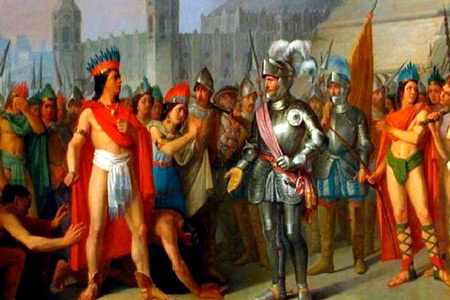
Instead of sending out plundering armies, the West has found a better way. It meticulously exports a seductive worldview to entrap unwitting partners.
DID the West's colonialist mentality die out with the last gunships and the hand back of Hong Kong? Or is it still alive? Does the West still look down on other cultures and believe in its Divine Right to plunder?
Perhaps it does.
Western societies haven't changed much at all. It's only their methods that have changed. Instead of sending out plundering armies, the West has found better way. It meticulously exports a seductive worldview to entrap unwitting partners. Today, lands intended for exploitation are not seized by force, but infected with an ideology that encourages them to surrender their wealth voluntarily.
Let's examine the evidence.
Key notions of modern Western thought are based on the ideas of free-trade, democracy and individual freedom. These are portrayed as commonsense ideas that no sensible person can argue against. Only Commies and Russian or Chinese Politburo flunkies are opposed to such ideas. And here, immediately, a divide becomes clear. Free trade, democracy and individual freedom are ideas not wholly embraced by all.

Graeme Maxton
Individualism is exploited for several reasons. It reduces the possibility of collective action. In 'democratic' practice, the voice of the people is kept weak while the role of the rich is enhanced..
Democracy, that essential pillar of Western freedom, is always closely tied to the notion of individualism. Both ideas, as propagated by the West, are central to the Austrian School of economic thinking, and have been actively promoted by the West since the end of the Second World War.
Individualism a double-edged sword
Individualism is valued for several reasons. It is easy to sell and it undermines social cohesion. It reduces the chances of collective action. Democracy hands power to those who can influence the outcome of elections most: not politicians, but the media, big corporations and the rich. It's called democracy because there are regular elections and people have the illusion of participation. In practice, the voice of the people is kept weak while the role of the rich is enhanced.
There are men of influence, such as Russia's Alexander Dugin, who believe Western democratic thought should be seen as a self-generating virus, not a system of governance. When it's applied to traditional societies, it often destroys them, causing them to descend into chaos. This is what the West intends, of course. The West's promotion of democracy is just a cynical ploy, Dugin argues, with deep, dark motives. It's a weapon used to extend imperialism, to divide other cultures, weaken them and assimilate or exploit them.
Modern Western notions of democracy are like the soma in Huxley's Brave New World; a drug that keeps people unthinking, a stimulant used to distract them from reality and what matters. Let the people get into a froth about those who wield very little power, and argue about the perceived differences between political parties that are nearly identical in practice. Let them think that ticking a box on a piece of paper once every four or five years is all that's needed to have their voice heard.
When it comes to economics, the West has worked hard to spread its ideas too. It has established pro-free-market publishers and think tanks. These offer employment to former politicians, bankers and journalists, people of influence who are selected because they will encourage the spread of Western thought. The way economics is taught in universities and schools has been changed too, with many students only taught about Western economic thinking. This encourages them to see Western neoliberalism as universal. Only unthinking nations, those whose people live in darkness, can't see this, is the message. They need to be enlightened by the West. Western economics is portrayed as the natural order.
These efforts have been so successful that even environmentalists propose market-based solutions to environmental problems. They've completely swallowed the idea that fixing the planet should yield a profit. Some even suggest nature should be treated as a financial asset, and called “natural capital”.
This monetisation of nature is pure Western neoliberalism. It's based on the idea that all decisions should depend on the profit that will be lost or gained. Western thinking on the environment views the world as a commodity.
The shackles of free trade
Another Western idea designed for the exploitation of the less economically developed world is free trade. Poor countries are told to embrace openness to trade, to sell their resources and labour without restrictions. This is a trap because it makes it almost impossible for them to industrialise. Without trade barriers, most countries can't compete with the scale and technology of Western countries. All they are able to do is sell their raw materials and labour cheaply. Free trade condemns the poor world to stay poor forever.
When it comes to economics, the West has worked hard to spread its ideas too. It has established pro-free-market publishers and think tanks. These offer employment to former politicians, bankers and journalists, people of influence
Only China managed to escape the trap. It protected its local industries from imports, and gave them time to develop. It blocks the sale of key raw materials. For almost every other country however, free-trade is colonisation by another name.
Related to this idea is the notion of minimal regulation. People are told that this will produce the best long-term outcome for the majority. In reality, a lack of regulation allows the finance sector to manipulate markets, and businesses to exploit people and nature. It allows businesses to make false claims and produce harmful goods; foods or medicines with long term side effects.
Ideas such as the "free market", "externalities", "the trickle-down effect" and "creative destruction", are deliberately used to cloak reality, to disguise injustice, to allow the high priests of Western thinking to increase their wealth without most people being aware of what they are up to.
Western economists have even reinterpreted Herbert Spencer's idea about the "survival of the fittest" to suggest it means that only the strong survive. This re-imagining encourages competition and dismisses cooperation, while suggesting that economics is somehow underpinned by the laws of nature. It is a zoological approach to development, based on the idea that the strong should destroy the weak. It is the rich who are good, saintly, sacred, and admired, while the poor are portrayed as feckless, lazy welfare scroungers.
This is not what Spencer meant by the term "the survival of the fittest" at all. He meant that those which "fit" their environment, are those that will survive. His message was about living in balance with the world, not striving to eradicate others in a fight to the top.
This idea, that everything in life is a battle, helps justify the West's aggressive behaviour. It favours war, conflict, takeovers, attacks, mergers and acquisitions, whether or not this is of long-term benefit to most people. It encourages the strong to use their feral power, validating their behaviour, like a conflict between carnivores and herbivores, a form of entertainment, a spectacle to satisfy animal instincts. It equates aggression with progress, with feeding the "blond beast", (the descendants of the northern European warrior class) as Nietzsche put it.
Free market thinking has merits, of course. It allocates resources efficiently, most of the time. It strives to make everything in the business world leaner, and drive prices lower, which can boost short term living standards. A focus on economic growth encourages private investment and innovation. The system is seen as flexible, with the ability to respond to changes in supply and demand.
But this thinking also tends to be wasteful. It encourages companies to make goods that fall apart, so more can be sold. It works less well when it comes to infrastructure, when it comes to roads, railways and energy. It rarely works well when it takes control of universal services, like schooling, healthcare or defence. It fails completely when it's faced with problems like climate change and microplastics in the environment. People are brazenly exploited throughout the world, and yet because everyone has been persuaded to think the system is essential and that they must act as lone individuals, any opposition is atomised.
The social divisions this thought system creates are powerful, and often hard to see. It is a racist system. There is an inbuilt bias in favour of the Coca-Cola culture of white people, especially white men, the old warrior class, and in favour of Western culture, which is viewed as intrinsically better than other cultures. The rules and values of the rich world are portrayed as universal laws: not just democracy, the free market and individualism, but also science, human rights, the sacredness of private property ownership, and unlimited technological progress. Christianity is in there too, as is a claim to equality of opportunity, which is never intended to manifest itself in reality. There is an inbuilt nostalgia for war and conflict, coupled with a belief that the present is always better than the past. The role and dignity of those who lived before, of our individual ancestors, is dismissed as unimportant.
Being rich and materially obsessed is good. Those who follow another God, who want to see some level of state intervention, those who oppose the blessings of the free market, are viewed as enemies
People are separated according to wealth, and the levels of progress the system defines. Being rich and materially obsessed is good. Those who follow another God, who want to see some level of state intervention, those who oppose the blessings of the free market, are viewed as enemies: the Russians, the Chinese, the Cubans, the Venezuelans, the North Koreans and others.
Freedom and identity
The focus on the individual undermines the chance for any collective identity too – ethnic, cultural, religious, and national – which, paradoxically, impedes awareness of individuality. It leaves people without any anchor to define themselves. People are left to work out what their identity means for themselves, and often struggle. The push for individual liberty, labelled as freedom, can be a prison.
The system expects people to work out themselves what their freedom is actually for. They are told there is freedom from: from state intervention, from constraints on their behaviour, from common responsibility, from ethnic or cultural attachments, from restrictions on what they say. They believe this freedom is real. The reality is that the state still wields enormous influence over their lives, as do large corporations. People are not free to act, nor to say what they want. They are only free from interventions that could be to their benefit; they are free from any meaningful wealth redistribution, they are liberated from the chance of collective action, and they are released from real equality of opportunity.
They are not free within their minds, which is what freedom was originally supposed to mean. Their minds are imprisoned by the Western worldview. Everything is contractual and technical, with the economy as destiny. Spiritualism is denied.
Nothing in the system explains what this constructed freedom is for. For most, it doesn't appear to be for anything much. They have the freedom to buy the latest mobile phone, to travel to places overrun with other tourists, to eat food that gives them diabetes and heart disease, to watch videos, to destroy nature. They have the freedom to be dutiful, undemanding consumers of whatever makes the best profit for the wealthy, regardless of the long-term social and environmental consequences.
The Western way of thinking, the economic way of living, has become a "common sense", in Gramscian terms. It has become so normal and accepted that no one thinks about it. The values of the West are taken for granted, accepted as natural, as if they were universal.
Of course, these values, the push for endless growth, for individualism, are not eternal or universal ideas at all. They are the thinking of just one culture, at one time.
For decades, the West has been doing everything it can to impose this thought system on everyone else, a source of irritation to many in Russia, India, China and the Muslim world. In effect, the West denies them their right to sovereignty, their right to live by their own systems of thought and development.
This thinking has become so embedded that it's impossible for those in the West to understand that not everyone wants to adopt their ways of living, that others might see this approach as homogenised and lifeless. The West's behaviour suggests it still believes other cultures are inferior, that other peoples are imperfect. Non-Western cultures are still being told to modernise and standardise as the West dictates. The West still wants uni-polarism, uni-culturalism, universalism.
Western colonialism is just as it always was. It's just the methods to impose it that have changed.
Graeme Maxton's latest book is The Follies of the Western Mindis. He has authored internationally acclaimed books on climate change, energy, economics and the automotive industry, which have been printed in more than 20 different languages. His books include A Chicken Can't Lay a Duck Egg (2020), - the German edition is F*ck the System (2021) - and Globaler Klimanotstand (2020). He is an Advisory Board Member of the UN's Pathways Project, and a member of the Editorial Advisory Board of Population Matters. He was previously Secretary General of the Club of Rome. www.graememaxton.com
Post a comment
- HOME
- BUSINESS
- DEVELOPMENT
- ENERGY
- ENVIRONMENT
- HEALTH
- INFORMATION
- POLITICS
- SECURITY
- SHIPPING
- SOCIETY
- TRAVEL
- TRENDS
Iran war causing chaos not change
Iran war and Gaza attacks have caused chaos, hunger, refugees, and new vendettas. Where does this lead? See world opinion
Once in a babymoon
Daft terms are counfounding travellers and mangling the English language ... more…
